
Rev Jackie's Blog 


News and thoughts from Rev Jackie's sabbatical 2026 
 

Week Six and Seven


miltom house

("Book reading - The Psalms - Pleins   Song reflection - Life & Breath - Matt Redman  -   Psalms read - 46, 76, 117, 118)  

Half way through almost and it doesn't feel like it.

Last week I was able to attend the Superintentents retreat and conference at Milton House Hotel near Oxford. The picture above shows their garden.

In the retreat we reflected on places which were important to us and it made me consider how we align ourselves to situations. Many shared of homes and locations and I reflected on my special place is the garden. A constant work in progress of planting and uprooting it is my bliss - though here in Manchester also very wet.

The highlight of the conference were 2 sessions focused on the Psalms. Rabbi Shoshana Boyd Gelfand led us through a session on Psalms in Jewish Worship - listening, reflecting and singing Psalms and pondering which Psalms Jesus sang.  Then Reverend Canon Nick Papadopulos reflecting the Psalms of the Passion.  Did they know that was my emphasis on sabbatical? Well of course not. It felt a wondrous confirmation from God though.

This week I've enjoyed a slower pace - sleeping and reading.

Psalm 46

When you read certain scripture does a song play in your mind - as we find ourselves reading and reflecting on Psalm 46 - verse 10a appears  - “Be still and know that I am God.”  What a precious command and invitation for the world to hear as well as ourselves. But unpacking the context and understanding the whole psalm sets this verse ablaze with meaning and glory far deeper than any relaxation mantra. When we see chaos and turmoil around us and inside us, we know we need strength and safety for our souls from outside ourselves. How can Psalm 46 help?

The authors of this psalm were the “Sons of Korah.” A group of Levites who served as musicians in the temple of God in the Old Testament (1 Chron. 9:19; 6:22-32). They wrote, arranged, and planned the music the people of God used in worship  (as suppose we would call them worship leaders).

It is considered that the Sons of Korah had a time of national distress in mind when they wrote this psalm. During the reign of King Hezekiah in Judah, Sennacherib, the King of Assyria, besieged Jerusalem. Hezekiah knew what Assyria had done to Israel just a short time earlier: siege, destruction, captivity in Assyria for the people of the northern part of Israel, and resettlement of Israel by other people groups (2 Kings 17:5-6, 24).

Assyria was capable and ruthless as it turned its murderous sights on Judah and the capital of Jerusalem. As you read Psalm 46, imagine the brutal Assyrian army surrounding Jerusalem while the Assyrian captain loudly shouts insults and threats for all the inhabitants of Jerusalem to hear (2 Kings 18:26). This took place around 702BC.

When King Hezekiah hears the threats, he tears his clothes, puts on sackcloth, and goes to the temple to beg for God’s help. And God, the refuge and strength of His people, hears and delivers. God tells Hezekiah: “I will defend this city to save it, for my own sake and for the sake of my servant David” (2 Kings 19:34). When the people of Jerusalem get up the next morning, they see the Lord’s work: the angel of the Lord had struck down 185,000 of the Assyrian troops. Let that number sink in: 185,000 dead bodies piled around the walls of Jerusalem. The next verse simply says, “Then Sennacherib king of Assyria departed and went home” (2 Kings 19:36). God totally squashed the threat and in response the Sons of Korah called Yahweh the “Lord of Hosts” (the Lord of Angel Armies), who is with His people. The covenant God of steadfast love, the God of Jacob, is present with overwhelming power (Ps. 46:11).

In fact, the refrain, “The Lord of hosts is with us; the God of Jacob is our fortress” (Ps. 46:7, 11) and the opening variation, “God is our refuge and strength, a very present help in trouble” (Ps. 46:1), point us to the structure and the main idea of the psalm. Psalm 46 divides into three stanzas, each punctuated with “selah” and the repeated idea of God as our refuge and fortress. This repetition and the song’s description of how God interacts with His enemies give us the main idea: God is the refuge of those who are at peace with Him, even when there is turmoil around us.

How is God present for us in our turmoil? In recognising the presence of God how can we Be still and know? For a moment dwell in that "Be Still" - "Be" and know God. 


Psalm 76

Linked to Psalm 46 and the period of History described above - this Psalm is attributed to Asaph—a key singer, musician, and seer during the eras of David and Solomon. The psalm may have been penned by a later descendant of Asaph if it directly references the Assyrian siege, which happened long after the original Asaph's lifetime which was around 1000BC.

Asaph is credited with writing 12 of the psalms in the Bible (Psalm 50, and Psalms 73 through 83)

Linked with Isaiah 36-37, and 2 Kings 18 this praise psalm was written celebrating a great victory of God on behalf of His people, and those who connect it with the defeat of Sennacherib (Isaiah 37:36).  

First, the psalmist celebrated when God shattered the siege of an evil power against Jerusalem. Because God is also faithful to deliver you, He deserves Your trust as well. Second, the psalmist celebrated that the enemy’s mighty chariots were no match for God’s power. Because God is faithful to deliver you, He also deserves your gratitude. Third, the psalmist rhetorically asked who can stand before God’s power. Because God is all powerful, He also deserves Your reverence. Fourth, the psalmist declared that God will one day judge all the Earth, sparing only the humble. Because God will one day judge evil, every person should humble themselves and repent of their sins. Fifth, the psalmist declared that God’s just wrath against evil would evoke praise from God’s people. Because God is faithful to deliver, He also deserves your worship. Sixth, the psalmist urged every person to respond by keeping their vows. Because God is faithful, He also deserves your obedience. Finally, the psalmist declared that the secular kings will be cut off and fear Him. Because God is sovereign over all, all should submit to Him.

How has God been faithful to you?

Psalm 117 - the shortest Psalm and one to be remembered. Using our protestant bible this is it is the 595th or middle chapter of the bible. Considered to be written by Asaph it focuses on hope and salvation.

Praise the Lord, all you nations;
extol him, all you peoples.
For great is his love toward us,
and the faithfulness of the Lord endures forever.

Praise the Lord.


As the bridge point of the Bible, it is also the first chapter to focus on God’s plan for universal salvation. It is also part of the “Hallel” Passover praises when the Jews celebrated how the blood of the Passover lamb allowed death to pass over them. Jesus Christ is not mentioned in this chapter. But everything points to Him. He is the Passover lamb, the Messiah, and the King of Kings for all the nations. Although unstated in the text, the promise of an offer of salvation is given to the Jews. This implied that they had a central role as God’s witnesses and light to the nations. The British preacher Charles Spurgeon once remarked: “This Psalm, which is very little in its letter, is exceedingly large in its spirit; for, bursting beyond all bounds of race or nationality, it calls upon all mankind to praise the name of the Lord.” Martin Luther was so moved by this chapter that he wrote 36 pages of commentary on its two verses.

Psalm 117 states: “ Praise the Lord, all nations; sing His praises, all peoples!  For His mercy toward us is great, and the truth of the Lord is everlasting. Praise the Lord!” (Ps. 117:1-2).

This psalm reveals five truths about God, with two additional truths revealed through the New Testament. First, God’s direction for all the nations to praise Him reveals His plan for universal salvation. Second, God’s description of both Jews and gentiles praising Him foreshadows the united praise and worship He will receive in heaven. Third, believers will celebrate God’s “hesded”. This is His covenant mercy, grace, and love. Fourth, believers will also celebrate God’s truth and His triumph over evil. Fifth, the everlasting praise for God points to both His everlasting reign and His everlasting faithfulness. Sixth, because God had the Jews sing this psalm after the completion of the Passover, it pointed to Jesus’ completed work at the cross. He is the fulfillment of God’s promise to make His covenant with Abraham available to all the gentile nations. Finally, this offer of salvation to the gentiles exists within a Jewish book of Psalms. Thus, they had an important role in fulfilling His plan for universal evangelism.

Psalm 118 - the author is not mentioned explicitly but it is considered to be King David  

On Easter Sunday, the church proclaims, “O give thanks to the LORD, for he is good; his steadfast love endures forever!” (Psalm 118:1). Written by King David in celebration of deliverance there is a spiritual movement of hope and exaltation. 

Jesus Christ is risen. And in Christ, we too shall rise.  God’s steadfast love endures forever!  The words of Psalm 118 have long been used to herald Easter. “This is the day that the LORD has made; let us rejoice and be glad in it!” (118:24).

In its ancient Jewish context, Psalm 118 was most likely an entrance liturgy to the Temple, used at the festival of Passover. It proclaimed God’s deliverance from Egypt and, later on, from the Exile. The Psalm was a liturgical script, complete with speaking parts for leaders and congregation. One can hear the jubilant call and response in 118:2-4: “Let Israel say, ‘His steadfast love endures forever.’ Let the house of Aaron say, ‘His steadfast love endures forever.’ Let those who fear the LORD say, ‘His steadfast love endures forever.'”

With this Psalm on their lips, the priests and people processed into the Temple. The approach to the Temple culminates in verse 19, “Open to me the gates of righteousness…” and the condition for entrance is given in verse 20, “The righteous shall enter through it.”  Then the festival procession proceeds up to the altar, to adorn it with signs of victory (verse 27). The physical movement begins outside the Temple, progressing inside and all the way to the altar. The people express their faith that since God has saved them in the past, he can be trusted in the future (verse 25).

The Psalm reminds us of our frailties- when hard pressed...we call to the Lord.  As we give thanks to God - let us call on His name.


18/05/2026

Permalink

Week Five 


IMG 4056 - Copy

("Book reading - Journeying Out - Ann Morisey   Song reflection - The Perfect Love of Jesus  -   Psalms read - 22, 58, 94, 109) 

Throughout the Gospels Jesus frequently withdrew from people, ministry, daily life activities to spend time with God. Reflecting on Jesus' pattern for ministry of servant, sacrifice and solitude he knew the importance of being.

The priority of Jesus’ solitude and silence is everywhere in the Gospels. It’s how he began his ministry. It’s how he made important decisions. It’s how he dealt with troubling emotions like grief. It’s how he dealt with the constant demands of his ministry and cared for his soul. It’s how he taught his disciples. It’s how he prepared for important ministry events. It’s how he prepared for his death on the cross.

A Ministers sabbatical invites us to join Jesus in his solitude so we can know God as "Abba" too and share his love with others.  My place is the garden - it is my bliss - keeps me grounded and in communion with nature. Plants from Cornerstone Plant Sale certainly help with this - well done.

When John Wesley taught that there is no such thing as a solitary Christian he was emphasizing his belief in a particular kind of realized ecclesiology — that the church is the church when it is gathered as a “Society.” Far be it from me to deny the social aspect of the church, of the Body of Christ composed of many members, and of the need Christians have for each other - enforced solitude though is difficult (I am missing the amount of people I normally link with). There is a difference between personal and spiritual practices of solitude and lone times to recharge the batteries and working in isolation as a Christian. Called to be in communion with God and each other we journey together - pilgrims on a divine journey of grace and love. 

Psalms - Did you know that 22 of the Psalms do not appear in the Lectionary cycle - these are 3, 7, 21, 28, 38, 55, 58, 59, 61, 76, 83, 87, 94, 101,102, 109, 110, 115, 117, 134, 140 and 149

Psalm 22 -
was most likely written during the reign of David as king of Israel (1010 – 970 B.C.). Before the time of Jesus, the Psalm was often read as a desperate prayer to God in a time of trouble. The Psalm captures the pain and agony of extreme suffering, while also highlighting the glory of God. There is a deep longing, lament in this Psalm and Jesus quotes a portion of the whilst on the cross.  “My God, my God, why have you forsaken me?…” (psalm 22:1); “and about the ninth hour Jesus cried out with a loud voice, saying, ‘Eli, Eli, lema sabachthani?’ that is, ‘my God, my God, why have you forsaken me?’” (Matt 27:46).

Did the writer of the Psalm or its listeners see this a prophetic telling of the coming Messiah or a deep lament similar to Job or Jeremiah? It is considered the one of the Davidic-Messianic (the earliest being Psalm 2)

This is the Psalm we read also at the end of our Maundy Thursday service depicting the torment and horror of the suffering servant. Lament - to mourn deeply, express hear sorrow over a loss of death. We find these often in the Psalms, CS Lewis on the death of his beloved wife Joy. If you haven't see the film Shadowlands - it is worth watching
Meanwhile, where is God? This is one of the most disquieting symptoms.

When you are happy, so happy that you have no sense of needing Him, so happy that you are tempted to feel His claims upon you as an interruption, if you remember yourself and turn to Him with gratitude and praise, you will be—or so it feels—welcomed with open arms.

But go to Him when your need is desperate, when all other help is vain, and what do you find? A door slammed in your face, and a sound of bolting and double bolting on the inside. After that, silence. You may as well turn away. The longer you wait, the more emphatic the silence will become.

There are no lights in the windows. It might be an empty house. Was it ever inhabited? It seemed so once. And that seeming was as strong as this. What can this mean? Why is He so present a commander in our time of prosperity and so very absent a help in our time of trouble? (CS Lewis A Grief Observed [New York: Bantam, 1961], 4-5) 


David in writing the psalm journeys from self to "But You" - look at the problem and the pattern in the Psalm. 
In the first couple of verses 

David groans to God . . . but there seems to be no salvation and none of God’s presence.
David cries to God . . . but there seems to be no answer and no rest.

And yet David moves from suffering to hope. Is this a pattern for us to follow. 

Psalm 58  - Yet another Psalm of lament but more - the writer - David calls down judgement on wicked leaders, rulers - this is called a Imprecatory Psalm.  A prayer for diving justice on wicked leaders.
It is only 11 verses but knowing the history of the Psalm is important. 

It suggested that this Psalm reflects in 1 Samuel 26 where Abner was giving King Saul evil counsel. Evil counsel to pursue David, to chase him down, to kill him, to rid the earth of David's presence.

And in 1 Samuel 26, we read about how God caused a very deep sleep to fall upon Saul and all of his camp. And while everyone was asleep, including Abner, who was Saul’s right hand man, David and one of his right hand men sneak into the camp right up to where Saul is sleeping on the ground, and they take Saul’s spear and they take his water jug, probably a leather water bottle, and they take these and they go out.

Then when the sun comes up, there’s David up on a hill looking down over the camp and he yells out for Saul. And he chews out Abner says, you weren’t protecting your king. Look, I’ve got the Saul spear and his water bottle and his king Saul looked down. Sure enough, they’re gone.

And he says, I could have killed you if I’d wanted to, but I’m not going to kill you. You’re my king. And Saul immediately repented and turned and left. He regretted what he had been doing.

But Abner was the one who kept egging Saul on to do this wickedness of trying to pursue and kill David. So anyways, that is the suggested background for Psalm 58.


The opening of the Psalm offers the following "For the director of music. To the tune of “Do Not Destroy.” Of David. A miktam".  Miktam is considered a musical term though otehr transaptions use the term Michtam which means engraved into metal. 

"God, knock the teeth out of their mouths" (Psalm 58:6). While this may seem aggressive, it symbolizes God's power to silence the wicked and protect His people from their harmful words and actions. 

I remember illustrating the power of words one day - knocking nails into wood and removing the nails still leaves the holes, the scars. 

In a week of local elections we need to pray even more for our elected leaders - where they are our chosen ones or not. Pray for wisdom and integrity.

David is writing this psalm basically to ask questions, what makes evil people tick? Why are they deaf? Why are they venomous? And he doesn’t even really give us an answer. He simply states, this is the case.
  
Psalm 94 -
the most painful wounds hurt. This is a Psalm written for a suffering community - God’s people were assaulted by the wicked, and then watching their assailants seem to get away with it. 
The author is not listed - liked to David or Moses it could be a later writer. And sung on a Wednesday. 23 verses it continues the patter of Psalm 58 in praying against corrupt and unjust leaders and shared themes with Psalm 10. 23 verses long as you read it the longing connects with us and our world issues.  It is the faithful appeal to God to do something. 


O Lord, how long shall the wicked,
     how long shall the wicked exult?
They pour out their arrogant words;
     all the evildoers boast.
They crush your people, O Lord,
     and afflict your heritage.
They kill the widow and the sojourner,
     and murder the fatherless. (Psalm 94:3–6)


The psalmist offers hope and comfort remind the followers of God to remain righteous inspite. It is a trajectory of the human history - a counter narrative to the world and its order. What counter narrative can we offer the world? When question by the world about whose side are we on - our answer must always be God's. When we are questioned for getting involved with world issues and politics we are speaking the words of truth and grace.

Ponder verse 19: When anxiety was great within me, your consolation brought me joy. 

Ponder verse 22 But the Lord has become my fortress, and my God the rock in whom I take refuge.
 
Psalm 109 - David pens another Psalm considered as the strongest imprecatory psalms, David’s songs that call down curses upon his enemies. It is important to remember that these are prayers, committing vengeance unto God. With the greater revelation of grace and truth that came by Jesus Christ, we are to pray for the good of our enemies, and not for their ruin.

David left it to God - he pours out his heart and seeks the balm of God. Comfort, strength and grace.  Its historical context centered around 2 possible key moments - (though to be fair most of David's life events are key) -  legal-style crisis where David faced slander, fitting the context of 2 Samuel 15–17 (rebellion) or his earlier flight from Saul. 

It is also cited as the Judas or Iscariot Psalm due to to v8 - May his days be few; may another take his office!" - The phrase let another take his office was, quoted by Peter to determine that the apostles should replace Judas in their apostolic number (Acts 1:20). 

The psalm opens with a plea - Lord do not be silent. This implies a lack of action - is God every inactive? David Says - "don't ignore me, hear me and respond to my request."  As the wicked surrender David seeks the Lord to defend him. What a reminder to us that we don't always have to defend ourselves. We serve a God who is for us, working in ways we cannot see.  Oh how we need to remember that.  We strive to be faithful, demonstrate love - David is rewarded - good with evil, love with hatred and he prays.

We see the shadow of the cross her - Jesus without cause - blameless, good, pure - life marked with evil surrounding him, falsely accused and lies spoken against him.  Jesus prays.

Let our commitment be to prayer. 

08/05/2026

Permalink

1-month
Week Four 

"Book reading - Style or Substance - William Taylor and David Dargue.  Song reflection -Cling to the Cross  -   Psalms read - 35,76,100,148 

The first month passes by and one 3rd of the sabbatical is complete. 

Deep rest and nourishment takes time  - it is a conscious stepping away from the demands of life to reconnect with God, self and allowing restoration. It is a conscious shift of rhythm.

The Model of sabbath sets a rhythm and pattern for working and resting affirming rest is holy and necessary. When is your sabbath?

Jesus offers an invitation which is divine, gentle and humble in Matthew 11:28-30  
28 “Come to me, all you who are weary and burdened, and I will give you rest. 29 Take my yoke upon you and learn from me, for I am gentle and humble in heart, and you will find rest for your souls. 30 For my yoke is easy and my burden is light.”

All that we carry often feels heavy and rarely light. Jesus' invitation is to step away from the busyness, demands and chaos.

In keeping with the Psalms - Psalm 127:2 we are reminded 
"In vain you rise early
and stay up late, toiling for food to eat— for he grants sleep to those he loves".


Refresh, replenish and restore

This week we attended Manchester Cathedral and attended Luminiscence - music, art and technology collide and you are immersed in history of Manchester's development.   No mention of God though it was a holy and sacred space that invited a spiritual response. Excellent

luminiscene


Psalm 35 - simply entitled a psalm of David this is a psalm known as a "Imprecatory" psalm - in strong terms asks God to defeat and destroy the enemies of His people. Not the strongest of mildest it is possible it is written around the time when David is pursued by Saul - possibly around 1 Samuel 24:15. David Speaks to Saul 15 “Therefore let the LORD be judge, and judge between you and me, and see and plead my case, and deliver me out of your hand.”

Psalm 35:1-3 
Plead my cause, O LORD, with those who strive with me;
Fight against those who fight against me.
Take hold of shield and buckler,
And stand up for my help.
Also draw out the spear,
And stop those who pursue me.
Say to my soul,
“I am your salvation.”


It feels as though David needing reassurance - "Say to my soul - I am your Salvation" seems a request for the renewing of the connection - communion with God. There is nothing greater in our lives - no greater word that reminding ourselves "God is our Salvation". 
David had doubts, got things wrong and when his happened he wasn't content. David wanted more in God and he sought God in the present not the future. 

Psalm 76 - A Psalm of Asaph - Asaph, from tribe of Levi, was a musician, worship leader, seer who was appointed by King David to lead praise at the Tabernacle - the Ark of the Covenant.  Credited with writing 12 Psalms (Psalms 50 and 73-83). Often associated with playing the cymbals (imagine the crashing noise) though this is sung with stringed instruments. 

Psalm 76 is a psalm of worship to God for a victory for the people of Israel and Judah. When enemies invaded God's power turned them back. Salem is another word for Jerusalem. Zion refers to the hill/mountain where David's palace was built.

God is renowned in Judah;
    in Israel his name is great.
2 His tent is in Salem,
    his dwelling place in Zion.
3 There he broke the flashing arrows,
    the shields and the swords, the weapons of war


This Psalm reminds us that God’s power is unmatched. When God arises to judgment, all the oppressed of the earth will be delivered.


Psalm 100 - 5 Verses - a psalm of thanksgiving and the only one entitled as that. 
It invites us to use this as a call to worship. Yahweh invites us to turn up the volume, shout, worship, enter, praise,bless. taken together these commands are such an invitation for the community to engage in singing in the long procession to the temple. Imagine the scene - all singing and proclaiming - not hidden behind closed doors. Yet amidst all of this is the intimate invitation to "know that the Lord is God" -it is not a superficial knowing but one of ultimate dependence and reliance - like the sheep withe shepherd. 

At a time of fracture in the world we need to shout this psalm. perhaps try singing it yourself.     

For giving grateful praise.

1 Shout for joy to the Lord, all the earth.
2     Worship the Lord with gladness;
    come before him with joyful songs.
3 Know that the Lord is God.
    It is he who made us, and we are his[a];
    we are his people, the sheep of his pasture.

4 Enter his gates with thanksgiving
    and his courts with praise;
    give thanks to him and praise his name.
5 For the Lord is good and his love endures forever;
    his faithfulness continues through all generations.


Psalm 148 -
another vibrant hymn of praise calling on everything created to praise the Lord. Nothing is excluded. This is Psalm which is not about defeat, failure, lament or human sin - it is the glory of redemption.  Reading this Psalm slowly and focussing on a few verses it reminds me of how all creation can be in harmony - co -existing together.  

13 times we are called to Praise - not to judge but to give oneself in surrender to the divine creator. What can we Praise God for - people, food to eat, waking, people who care and who we care for, the gorgeous tree, birds that fly. All reasons to praise the Lord - what are yours?

Let everything that has breath praise the Lord. 


Permalink

Week Two and Three 

Barren land

"Book reading - The return of the Prodigal Son - Henri Nouwen.  Song reflection - Holy Song  -   Psalms read - 13, 23, 63, 139  

O God, Thou art my God, I seek Thee, my soul thirsts for Thee; my flesh faints for Thee, as in a dry and weary land where no water is. Psalm 63:1

A slower pace of life these two weeks with time spent in London and Guildford.  This has meant some time reflecting on life and ministry  - reading the psalms and the start of writing vestry prayers.

How do you prepare for worship?  "Dear God, I desire you. I long for more of you in my life - speak to my heart and life that I may be changed." Amen

Spiritual Dryness like a garden needs tending and watering -  a  thirst of God invites us to respond and to ask for that thirst to be quenched. 

“The further I run away from the place where God dwells, the less I am able to hear the voice that calls me the Beloved, and the less I hear that voice, the more entangled I become in the manipulations and power games of the world.” ― Henri J.M. Nouwen, The Return of the Prodigal Son: A Story of Homecoming

St. Ignatius of Loyola speaks of times of consolation, when prayer is easy, joyful, and satisfying, and times of desolation, when prayer is dry, uncomfortable, and unfulfilling. God gives us consolation to renew us; desolation purifies us from our attachments and to remind us of our utter dependence on God. Consolation is valuable in that it encourages us to continue our prayers and devotions, but it’s our faithfulness in times of desolation that allows us to make great spiritual progress.

So I thirst for more of God - more of Gods grace and love, more of his mercy.

Psalms - King David was 30 when he became King. 

Psalm 13 - written by King David in a time of trial - possibly during the Babylonian Exile though it is difficult to pinpoint to a specific time.  "How long.." a lament we can all identify with. A request for divine help.
David's humble beginnings sets him apart as God chooses him to be King, and as a King faced a jealous predecessor - Ish-bosheth (or Ishbaal): Ruled briefly after Saul (one of Saul's sons) , mainly over the northern tribes. (2 Samuel 2:8-21).  David had clearly identified enemies and made major mistakes in life (who hasn't). In that context he expresses a vast range of emotions. 

"How long O lord, will you forget me for ever"   - as we consider the love of God expressed in Jesus we reflect on the ending of the psalm - "But I trust in your unfailing love;  my heart rejoices in your salvation.  I will sing the Lord’s praise, for he has been good to me".

Psalm 23 - written by King David reflects on his humble beginning as a shepherd illustrating God's intimacy, goodness and provision. Written over 3000 years ago ( just let that sink in for a while) around 1000BC (David was King from 1010-970BC). Could it be a period of reflection in the later part of his life. As you reflect on your life what characteristics of God's love and provision speak to you?

David didn't invent the view of God being Shepherd - it is peppered through scripture. “God will feed his flock like a shepherd,” said the prophet Isaiah, “and will gather the lambs in his arms, and carry them close to him, and gently lead the mother sheep. . .” (Isaiah 40:11)

The prophet Ezekiel put it even more strongly: “Thus says the Lord God: I myself will search for my sheep, and I will seek them out. As shepherds seek out their flocks, so I will seek out my sheep. I will rescue them from all the places to which they have been scattered. . .I will bring them out from the peoples and gather them from the countries. . .I will feed them with good pasture. . . I will seek the lost, I will bring back the strayed, I will bind up the injured, and I will strengthen the weak. . .I will feed them with justice.” (Ezekiel 34:11-16)

So, David didn’t invent this idea and gives himself to it - The Lord is my shepherd - that is all we need.

Psalm 63 - Written by David perhaps in a time of wilderness in Judah. Most commentators believe it to belong either to David’s wilderness years before he came to the throne of Israel, or to his brief exile from the throne in the rebellion of Absalom. The wilderness years when hunted by King Saul are preferred, but not held with absolute certainty. 

O God, You are my God;
Early will I seek You;
My soul thirsts for You;
My flesh longs for You
In a dry and thirsty land
Where there is no water.
So I have looked for You in the sanctuary,
To see Your power and Your glory.


Psalm 63 is about being thirsty. Not in a physical way, but physical thirst is a good word picture for something that God has placed in every human being. Every human being, even the most irreligious person, is spiritually thirsty. St. Augustine’s Confessions  in which Saint Augustine states “You have made us for yourself, O Lord, and our heart is restless until it rests in you.” reminds us where our hope is

Psalm 139 - A song of David - “You have searched me, Lord, and you know me.”  Musicians would have performed and sung this magnificent psalm. It is a remarkable piece of poetic theology–powerful writing in every sense. Why is it so powerful? 1 Samuel 16:23 tells us David played the harp for King Saul. Anointed music lifts the soul. Possibly attributed to the time when David is made King.

This is the reading I look at when selecting a new translation/version of the bible. It's poetry lifts the soul.  A psalm of God's omnipresence and omniscience. 
1-6: God’s omniscience (He knows all).
7-12: God’s omnipresence (He is everywhere).
13-18: God’s omnipotence (He forms life).
19-24: A concluding prayer against wickedness and a request for divine searching.

We cannot flea from God's presence. 


Permalink

Week One 

IMG 1696   

"Book reading - An Altar to the World" Barbara Brown Taylor.     Song reflection - God of Every Grace.  Psalms read - 1, 8, 90, 121    

"We live, in fact, in a world starved for solitude, silence, and private: and therefore starved for meditation and true friendship"  "The Weight of Glory". Book by C. S. Lewis, 1949.

Stopping for anyone can be hard. A sabbatical is a gift from the church - every 7 years - a 3 month moment of pausing and reflecting. Just as nature transitions between night and day, winter and summer, and seasons change, we need to do the same. So whilst this sabbatical is a few years late it is received, as intended, as a gift from the rhythm of ministry.

There are those who have said over about my last 2 sabbaticals:
  • "you only work one day a week, now three months off" - often followed up by other misguided comments  
  • "enjoy your holiday"
  • "what about the volunteers who work all week and then give to church at the weekend"
and there are others who understand that one day off a week is not sustainable, days of at least 14 hours and call outs, caring for the flock, oversight of resources, vision and strategy.  

So pause, reflect, examine and hopefully adapt.  “An unexamined life is not worth living.” Socrates

As a I pause I reflect on the following - What brings joy? What are the biggest learnings and insights? What's unnecessarily draining?

I'll be reflecting on the Psalms 


The first week of sabbatical brought a change of plan - from a joyous wedding in Durham to the Lake District and not Mull as intended due to weather, ferries and hotel changes. 

The lakes straight away offered a slower pace and a meeting with Jack the alpaca. Hilarious encounter all aided by treats for Jack - who knew the rustle of a bag could have 16 llamas/alpacas running towards you. I was committed and dedicated to Jack though.
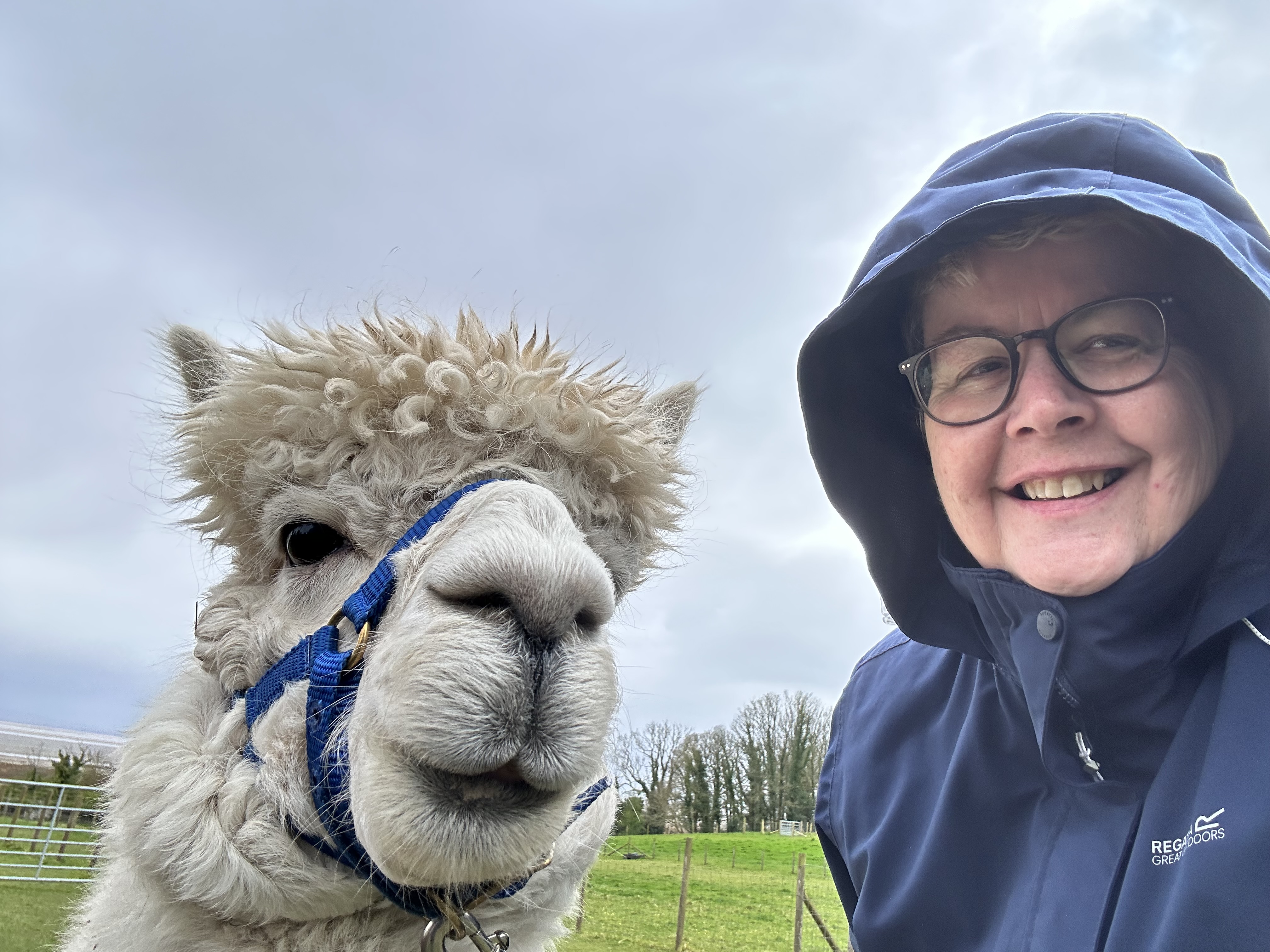

IMG 1678 IMG 1677
The Psalms 

The psalmists include some of the most beautiful phrases in scripture. Prayed over for last 3000 years they bring comfort, challenge and praise. They lift us, offer lament and level us.  They are a source of solace and inspiration flowing from the human heart and experience.  We read the New Testament alongside the Hebrew scriptures - things make sense when we read biblical texts and the relationship between the two. 

Psalm 1 - not just the first (though not the first written) it is almost an introduction to the Psalms - in a few earlier editions this Psalm was unnumbered and sat almost as a preface before the remaining Psalms.  These Psalm 1 didn't just happen to be placed at the beginning of the book - as highly edited it was intentional. Psalm 1 offers a contrast between the way of the righteous and the way of the ungodly reminding us by not doing certain things brings happiness - it seems a negative approach but wisdom oozes. As social creatures (just like Jack the alpaca) we are influenced by our environment - good and bad. if we want to dwell within the light of God - a righteousness life - be careful where you hang out. Be mindful of who influences minds and hearts.  In the Psalmist words turn toward the positive - what are the places, the people, the activities that guide us towards goodness, righteousness and love?  and be grounded -  They are like trees planted by streams of water, which yield their fruit in its season, and their leaves do not wither. In all that they do, they prosper. Psalm 1

But Paul reminds us that it’s even wider than that.  “Finally, beloved, whatever is true, whatever is honorable, whatever is just, whatever is pure, whatever is pleasing, whatever is  commendable, if there is any excellence and if there is anything worthy of praise, think about these things.” (Phil. 4:8)


Psalm 8 - what beautiful poetry - the night star draws us in and we are dazzled by its glory. If only the psalmist had a telescope - so much more to witness. Yet a handful of stars refused to behave - the wanderers - as the Greeks finally called them saw a handful of stars refusing to meld and exist like the others (well done the wanderers).  The Greek word for wanderers is planeo from which we derive planets - perhaps those wandering stars were other worlds of their own.  We cannot unsee the images of Earth, Jupiter, Saturn and Venus but that wasn't known to the writer of Psalm 8. How much more cause for joy then. It is estimated there are 10 billion galaxies with each galaxy containing 100 billion stars. It isn't just what we say for that is a fraction of what is really out there.
So the psalm is humbling - not just "out there" but look around - the birds of the air (Artic Terns fly 10000 miles round trip from Antartic to Asia for the summer. 

In just 70 Hebrew words  we are pulled in to think of God, creation and their relationship. psalm 8 the first praise Psalm and the only one as a direct address to God.
Creation matters and God loves it. Why for it declares the glory of God. And we - we are to care for it.  “O Lord our Lord, how majestic is your name in all the earth"


Psalm 90 - the ticking of a clock astounds us - we pay attention at different times of lives - the first and last breath - time all noted.  Time is different - in an airport lounge to a doctors waiting room it is impactful. Psalm 90 is all about time and is often used at a funeral service.
Written by Moses it is considered to be the first Psalm written (other Moses psalms 90-106). 
the Psalm commences my Lord - unique in the Psalms and quite appropriate. It points to Yhwh's power and relationship with the speaker.  Moses throughout the Psalm spas of experience (possibly written in the wilderness in Canaan). Psalm 90 s not disconnected from Moses other writings - its a reflection on them.
Moses writes: “You turn man to destruction,  And say, ‘Return, O children of men.’” (Psalm 90:3, NKJV) 

While this verse doesn’t mention dust explicitly, it clearly echoes what Moses had already written in Genesis after the fall:  “For dust you are, And to dust you shall return.” (Genesis 3:19, NKJV) 

This isn’t just poetic language—it’s a reflection of a reality Moses saw up close. The judgment described in Genesis and carried out in the wilderness became something he witnessed firsthand. 
Psalm 90 focus is on God's eternal nature of the brevity of human life.

Psalm 121 - where do you look for help?  
Psalm 121 is a Song of Ascents, one of the many said to be written by King David, is recited in times of trouble. In fact, it was taught that David himself was feeling hopeless when he composed this psalm (see Psalm 120 for information on his troubles). King David was looking for a ray of light, a modicum of peace. In a time when he was seeking hope and inner strength, he asks, “Who will help, and where will that help come from?” And before asking the question, of which he surely knew the answer, he turned his eyes to the mountains.  
Where do you look for help? Does you gaze go to the person who you love and trust - the one who brings calm into a situation.

Often recited a the start of the journey the traveller asks a question and the answer is clear to see - 1 I lift my eyes to the hills — from where will my help come? 2 My help comes from the Lord, who made heaven and earth.

The psalm begins with a question to which anyone can relate: Where can I get help? Or better, where can I look for help? So we ask in the midst of space and time - where do we look for help?

 
Permalink

Planning your Visit